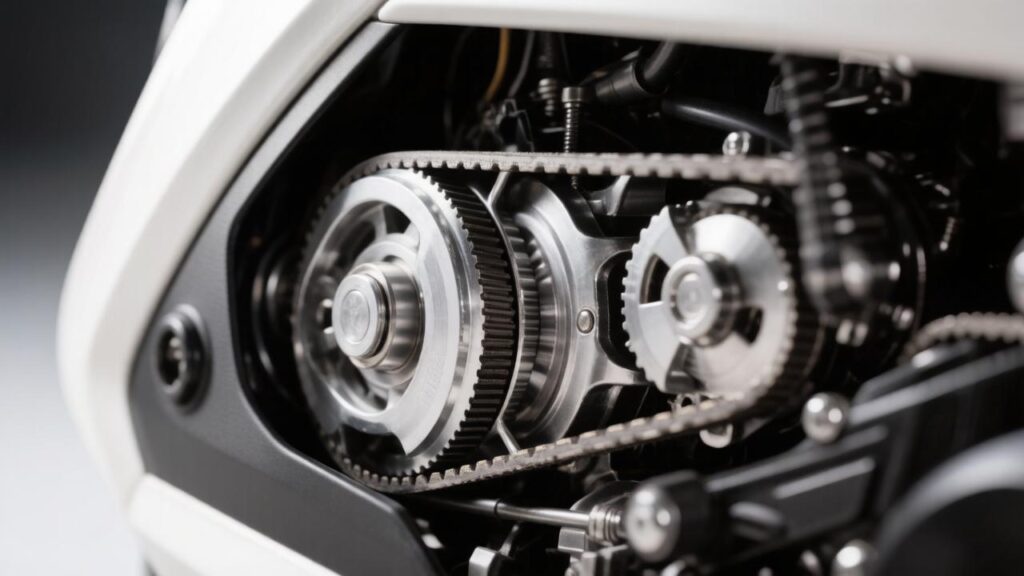
When preparing to rent a scooter chiang mai, independent travelers are instantly confronted with a crucial mechanical choice that dictates their entire driving safety, physiological comfort, and survival margin. Showroom floors across Northern Thailand are densely populated by two fundamentally distinct engineering platforms: Continuous Variable Transmission (CVT) automatics and manual or semi-automatic sequential gearboxes. Choosing blindly based on superficial aesthetics, digital dashboard features, or basic rental prices can lead to catastrophic mechanical failure, severe engine overheating, or unstable handling when transitioning from flat urban corridors to steep alpine inclines.
Navigating the complex geographical layout of Chiang Mai province requires a vehicle that perfectly balances torque delivery with continuous heat dissipation. Automatic platforms dominate the tourist market due to their low operational entry barrier, yet semi-automatic and manual machines hold massive structural advantages when descending high-altitude passes. This exhaustive technical vetting breaks down the internal architecture, drivetrain efficiency, braking thermodynamics, and chassis weight distribution of both systems to ensure your vehicular selection aligns with your regional itinerary.
Mechanical Core Metric: Drivetrain Efficiency Loss
Standard automatic CVT systems experience roughly 15% to 25% power loss between the crankshaft and the rear tire due to frictional drag within the rubber belt and variable pulley faces. In contrast, chain-driven manual or semi-automatic systems lose less than 5% of their mechanical energy, providing raw, direct power transfer to the asphalt when fighting extreme vertical gradients.
The Continuous Variable Transmission (CVT) Architecture: Mechanics and Limits
Modern automatic scooters rely on a dry rubber drive belt, centrifugal weights, and a split-pulley system to adjust gear ratios fluidly without rider intervention. This mechanical configuration allows for instantaneous throttle response, making it highly efficient for navigating the dense traffic grids of the Old City or commuting between local artisan cafes. The rider is completely freed from manual clutch modulation and foot-shifting, allowing 100% of their mental focus to stay fixed on local traffic patterns, unexpected pedestrians, and checkpoint navigation.
However, the convenience of a CVT system introduces structural weaknesses that become critical during long-distance touring. The internal transmission components generate substantial heat through friction. Because this entire assembly is sealed inside a compact aluminum case to protect it from road dust, it relies on restricted air channels for thermal management, which fail to cool the unit effectively under extreme conditions.
Thermal Dissipation Limits of Automatic Systems
The primary engineering vulnerability of a CVT system becomes apparent during prolonged vertical ascents, such as climbing toward the summit of Doi Suthep or Doi Inthanon. Because automatic scooters rely on ambient air entering a small filtered housing to cool the transmission belt, driving at low road speeds under high throttle loads causes severe internal friction. The centrifugal clutch continuously slips, generating immense thermal energy that can glaze the clutch pads and degrade the drive belt, resulting in sudden momentum loss on steep gradients.
The Sequential Manual and Semi-Automatic Framework: Maximum Power Transfer
In contrast to automatics, semi-automatic platforms (such as the ubiquitous Honda Wave series) utilize a permanent steel chain drive and a foot-operated sequential gearbox combined with an automatic centrifugal clutch. This configuration eliminates drive-belt slippage entirely, converting 100% of the engine’s rotational force into direct forward momentum. For riders targeting advanced mountain circuits, this mechanical layout offers unparalleled traction management.
By removing the rubber belt and dry pulleys from the equation, geared platforms eliminate the risk of transmission glazing under heavy loads. The mechanical locking of gears ensures that engine power scales linearly with throttle input, preventing the sudden drops in momentum that plague automatic scooters when attacking steep switchbacks with a full payload.
Advanced Engine Braking on Descending Gradients
The standout advantage of a geared platform lies in its capacity for natural compression braking. When descending steep mountain routes, an automatic scooter disengages its clutch once the throttle is closed, forcing the rider to rely exclusively on physical brake pads and fluid. A semi-automatic machine allows the operator to lock the transmission into second or first gear, using the engine’s internal atmospheric pressure to regulate downhill velocity dynamically, preventing hazardous brake fade.
Chassis Dynamics, Gravity, and Component Wear
The physical footprint of these transmission types significantly impacts how a vehicle distributes its payload weight. Automatic scooters typically house their heavy engine and transmission assembly directly over the rear axle, creating a rear-heavy weight bias that requires smooth front-brake management. Geared machines position the power plant centrally within the frame down-tube, promoting a perfectly balanced center of gravity that optimizes front-tire traction throughout tight, wet mountain switchbacks.
This distribution changes how the suspension behaves under heavy compression. A rear-heavy automatic scooter compresses its rear shock absorbers deeply when carrying a passenger and luggage, reducing the available front-fork travel and making the steering feel light and disconnected. A center-mass manual bike shares the load equally across both axles, keeping the tire contact patches stable during high-speed cornering on uneven mountain asphalt.
Real-World Environmental Stresses
Flooded Urban Sois: Automatic CVT systems are highly vulnerable to water entering the belt housing during heavy monsoon flooding. If water breaches the seals, the belt slips completely, leaving you stranded. Geared chain-driven systems handle water crossings with zero slippage.
High-Altitude Commutes: Automatics require high engine RPMs to keep the clutch engaged during ascents, accelerating engine oil degradation. Geared platforms allow low-RPM high-torque crawling, preserving mechanical integrity over extended tours.