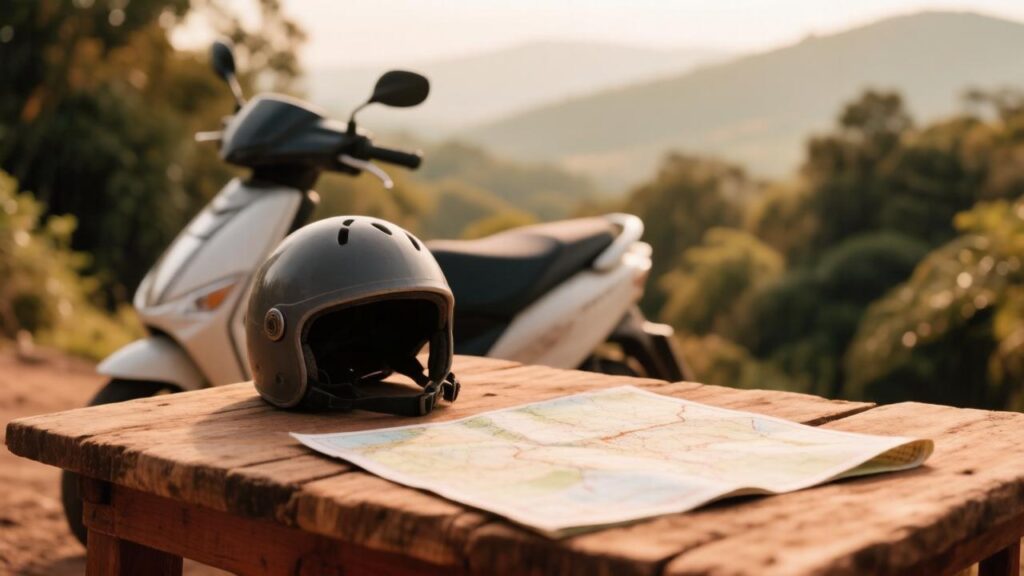
Executing a successful overland journey across the remote peaks and deep valleys of Northern Thailand begins long before the first twist of the throttle. Sourcing a dependable machine through a specialized motorbike rental in Chiang Mai requires aligning your vehicle’s mechanical specifications with the precise logistical demands of multi-day touring. When evaluating a professional scooter rental provider in the city center, travelers must factor in departure logistics, emergency support radiuses, and luggage capacity configurations before heading into isolated alpine sectors.
This expedition roadmap maps out the primary logistical corridors originating from the urban valley basin, analyzing fuel stop frequencies, terrain transition points, and vehicle preparation milestones required to bridge the gap between city streets and high-altitude wilderness.
The Initial Deployment Phase: Leaving the Urban Basin
Departing Chiang Mai toward the northern and western mountain passes involves navigating dense perimeter traffic before hitting the open national highways. Riders must treat this initial thirty-kilometer stretch as a system check zone. Monitoring engine response, brake bite consistency, and mirror vibration profiles at moderate speeds allows you to catch minor mechanical anomalies before you are miles away from support infrastructure.
Managing Fuel Cells and Geographic Range
High-altitude riding alters fuel consumption metrics significantly due to continuous throttle loading and lower atmospheric density. Standard 5.5-liter fuel tanks found on popular regional commuter platforms provide an operational range of roughly 180 to 220 kilometers depending on the steepness of the inclines. Planning your refueling stops around designated rural hubs—such as Pai, Mae Ho, or Khong—ensures you never find yourself stranded along empty ridge lines.
Luggage Weight Distribution and Chassis Balance
Packing for a remote expedition while utilizing a regional rental machine introduces unique stability challenges. Overloading the under-seat storage or mounting heavy packs onto rear racks shifts the vehicle’s center of gravity backward, lightening the front tire contact patch and inducing dangerous high-speed wobble on sweeping downhill curves.
Weight Bias
Keep heavy items positioned low inside the central floorboard zone or backpacked close to your spine to preserve front-end steering fidelity.
Emergency Gear
Always carry a portable tire pressure gauge, a high-capacity mobile power bank, and verified offline digital routing charts before departure.
Returning to the Hub: Post-Expedition Inspection
Upon completing an intensive mountain loop, returning the machine requires a final joint review with your rental provider. Documenting any road-rash from loose gravel, noting abnormal CVT belt noises, or reporting suspension bottoming ensures transparent accountability and helps maintain the overall quality of the regional fleet ecosystem.
Expedition Logistics Summary
Treating your departure from Chiang Mai as an engineered logistical operation guarantees safety, mechanical preservation, and absolute peace of mind across the most scenic roadways in Southeast Asia.