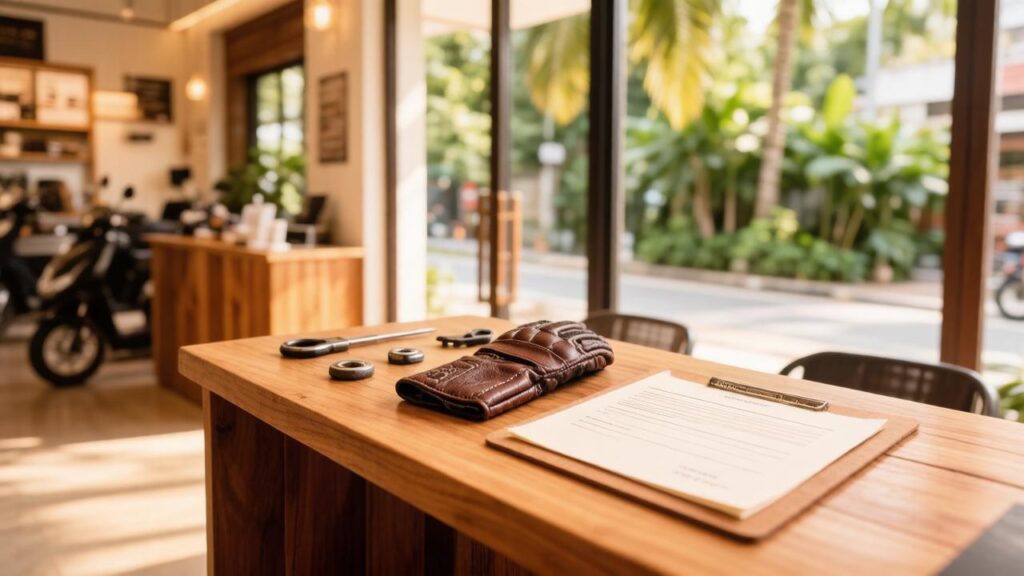
Securing reliable two-wheel transport within the mountainous hub of Northern Thailand involves navigating a complex web of administrative policies, insurance tiers, and local regulatory requirements. For independent travelers orchestrating a long-range highland expedition, finalizing a secure agreement with a reputable scooter rental chiang mai provider requires absolute diligence regarding contract terms, passport retention protocols, and international legal compliance. Overlooking fine-print disclaimers during the initial leasing process can expose an operator to severe financial liabilities and administrative friction.
This comprehensive legal and operational blueprint examines the critical elements of regional transport leasing. By understanding how local commercial frameworks manage liability, deposit structures, and cross-border permissions, riders can protect themselves against unforeseen operational roadblocks before leaving the city limits.
The Regulatory Framework: International Driving Permits and Licensure
A foundational legal prerequisite for operating motorized two-wheel machinery in Thailand is the possession of a valid domestic motorcycle license accompanied by an official International Driving Permit (IDP) endorsed for Category A vehicles. Local law enforcement checkpoints stationed along major routes—such as Highway 107 or the ascents toward Samoeng—actively inspect driver credentials. Presenting a standard automobile-only license invalidates third-party liability protections and results in immediate localized fines.
Furthermore, regional leasing agencies operate under strict insurance stipulations. In the event of an untoward physical incident, insurance underwriters routinely inspect the operator’s physical driving credentials. Operating a high-displacement machine without the proper motorcycle endorsement transfers total financial and legal responsibility directly onto the individual traveler, bypassing any baseline coverage provided by the commercial lease.
Contract Transparency and Passport Security Standards
Professional regional operators maintain standardized, transparent leasing agreements written in both Thai and English. When reviewing a standard contract, carefully inspect the clauses pertaining to mechanical damage assessments, pre-existing cosmetic scratches, and routine maintenance responsibilities during the lease lifecycle.
A contentious point in regional transport commerce involves the retention of original passports as a security deposit. Standard consumer protection practices advocate for leaving a high-value cash equivalent deposit rather than relinquishing an original government passport, ensuring you retain absolute freedom of movement and identification integrity throughout your stay in the kingdom.
Unpacking Insurance Tiers: Collision Damage Waiver vs. Third-Party Liability
Commercial coverage models within the local transport sector vary drastically from Western automotive standards. Basic fleet leasing typically includes only compulsory government insurance (Por Ror Bor), which covers minimal medical expenses for third parties involved in an accident and offers zero protection for the rental vehicle itself or the primary rider’s medical rehabilitation.
Discerning operators should actively seek out extended Collision Damage Waiver (CDW) options or verify their personal international travel medical policies explicitly include coverage for high-displacement motorized transit. Clarifying these financial boundaries prior to signing eliminates devastating out-of-pocket expenses in the unlikely event of a structural mishap on remote provincial corridors.
Deposit Accountability Protocols
Always execute a timestamped photographic and video walkthrough of the machine in the presence of the agency representative during handover. Document existing rim abrasions, exhaust cowlings, and mirror housings to guarantee a frictionless security deposit refund upon final vehicle repatriation.
Geographic Limitations and Inter-Provincial Travel Clauses
Certain budget-tier commercial providers restrict vehicle movement strictly within the Chiang Mai municipal perimeter or immediate adjoining districts. Attempting a major multi-province expedition—such as crossing into neighboring Chiang Rai, Mae Hong Son, or Lampang—without explicit written clearance from the leasing office can void roadside recovery assistance agreements.
Ensure your chosen provider formally acknowledges and endorses your intended route map, particularly if your itinerary includes extended remote segments where local service networks require specialized agency dispatch authorization.
Administrative Conclusion for Independent Riders
Treating the legal and administrative phase of vehicle acquisition with professional rigor safeguards both your financial assets and your physical safety. Clear contracts, valid credentials, and transparent insurance verifications transform a routine commercial lease into a secure foundation for an elite overland adventure across Northern Thailand.