Operating a lightweight automatic vehicle under continuous high-load conditions across the mountainous networks of Northern Thailand demands flawless mechanical efficiency. While urban commuting allows for minor vehicle discrepancies, entering the remote sub-alpine passes requires a rigid adherence to preventative diagnostic verification. For international travelers sourcing machinery from a regional chiang mai scooter rental fleet, conducting a systematic, uncompromised pre-handover evaluation is the single most critical safety checkpoint before signing a leasing contract.
Most mechanical breakdowns in the highlands are entirely preventable. They stem from gradual component fatigue that remains invisible during a casual low-speed test ride around a city block. This technical protocol outlines the deep-level inspection standards required to verify chassis alignment, thermal capacity, and friction thresholds under extreme stress.
Diagnostic Phase 1: Structural Integrity and Alignment Check
A minor low-speed drop by a previous operator can induce subtle lateral twists in the front fork stanchions or steering stem. This misalignment might not be perceptible at twenty kilometers per hour, but it will manifest as violent high-speed chassis weaving or unstable front-end tracking during high-lean downhill descents.
To verify structural alignment, position the vehicle on a flat concrete surface using the central center-stand. Align the front wheel perfectly straight and visually inspect the symmetry of the handlebars against the instrument cluster and the front tire axis. Next, execute a manual load test on the front suspension by compressing the forks multiple times with the front brake locked; listen for any internal clicking, fluid leaks around the dust seals, or uneven rebound resistance that suggests damaged valving.
Diagnostic Phase 2: Powertrain Fluid Analysis and Thermal Safety
Continuous low-speed climbing forces automatic engines to operate at peak internal temperatures for extended intervals. This thermal stress accelerates engine oil shearing and puts immense pressure on the cooling framework.
Request the service tools to inspect the engine oil dipstick prior to completing the handover. The lubricant must possess a clear golden-amber hue and a uniform viscosity free of dark carbon suspensions or milky emulsions—the latter indicating internal coolant leakage through a blown cylinder head gasket. Furthermore, verify the reservoir levels of the liquid-cooling loop; an under-filled radiator matrix will inevitably lead to a critical overheat condition on vertical mountain inclines.
Diagnostic Phase 3: Friction Material and Brake Calliper Verification
Downhill mountain navigation relies entirely on continuous kinetic energy dissipation via the vehicle’s braking system. Total thermal saturation can happen rapidly if the pads or rotors are pre-worn beyond technical service limits.
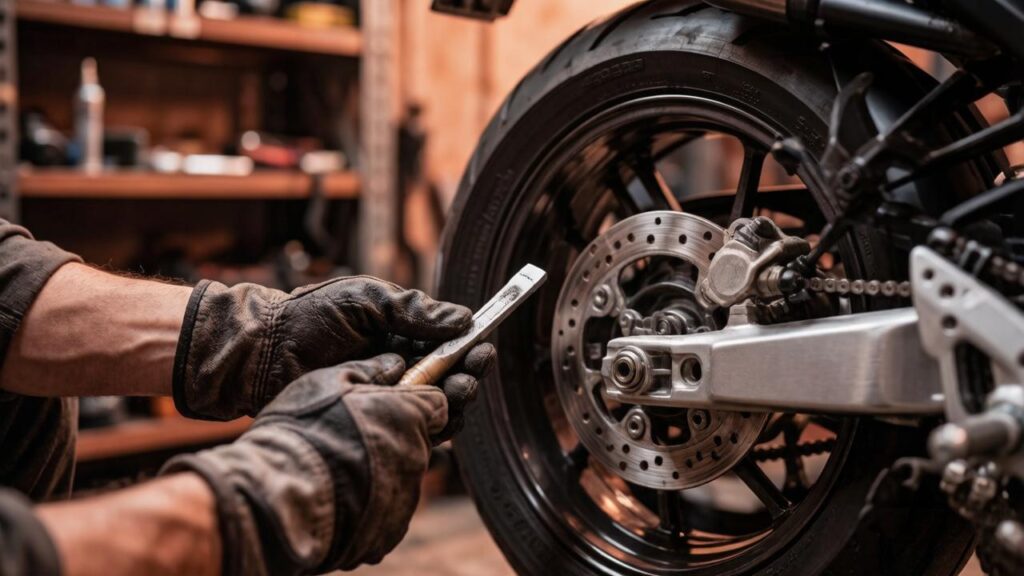
Physically measure the remaining friction material on the front hydraulic brake pads. A minimum of 2.0mm of pad compound must be present above the metal backing plate. Visually inspect the front disc rotor for deep concentric scoring, excessive warping, or bluish discoloration—all classic indicators of previous severe overheating. For vehicles utilizing a rear drum setup, verify that the cable adjustment nut has sufficient threads remaining to compensate for friction material wear during a multi-day tour.
ENGINEER NOTE: WHEEL BEARING SECURITY
While the vehicle is elevated on the center-stand, grip the front and rear tires at the 12 and 6 o’clock positions and attempt to apply lateral force. Any perceptible play or clicking noise indicates worn wheel bearings. A failing bearing will rapidly disintegrate under the intense side loads encountered on technical curves, resulting in an unrecoverable loss of wheel control.
Diagnostic Phase 4: Final Drivetrain and Electrical Testing
The continuously variable transmission (CVT) system must be audibly verified under load. During the initialization phase, accelerate the scooter on an open straight segment while keeping an ear tuned to the transmission casing. Any loud whistling, metal-on-metal rattling, or severe shuddering upon initial clutch engagement points toward flat roller weights, a glazed clutch bell, or a heavily frayed drive belt.
Finally, ensure the electrical charging system is fully operational. High-intensity lighting is crucial for visibility during sudden afternoon cloud cover in the mountains. Test both low and high-beam configurations, front and rear turn indicators, and ensure the brake light activates reliably from both the left and right handlebar levers.
Inspection Protocol Conclusion
By conducting this analytical check before concluding a fleet leasing transaction, travelers remove random chance from their mountain expeditions. Demanding a vehicle that complies with these precise structural and mechanical standards guarantees an elite overland transit experience across the challenging topography of Northern Thailand.