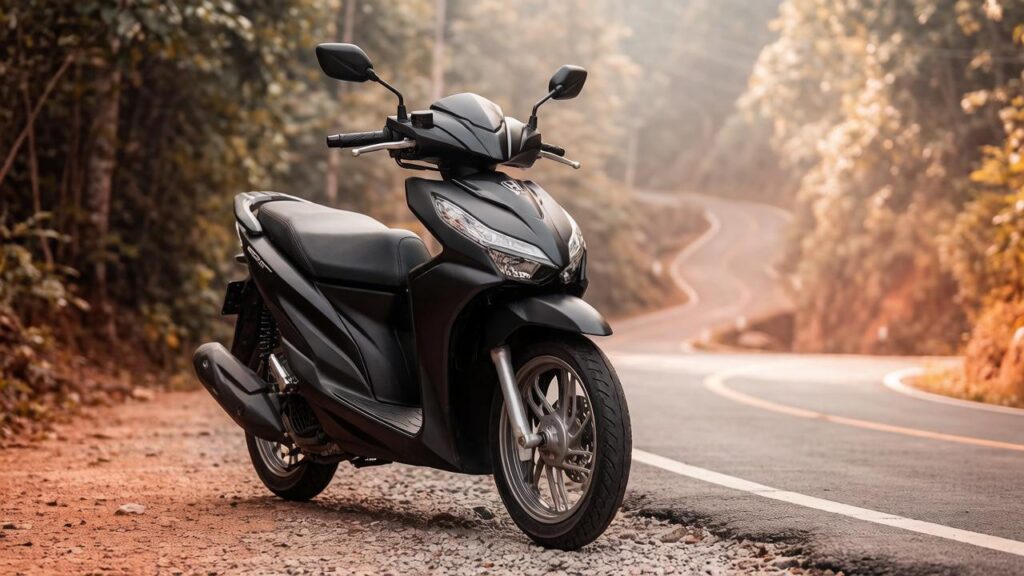
Selecting the appropriate two-wheel mechanical platform when planning long-distance transits across the demanding, high-altitude topographical landscape of Northern Thailand defines both physical endurance and absolute safety margins. Navigating the steep ascents, sudden monsoonal washouts, and hundreds of consecutive switchbacks throughout Chiang Mai Province requires a structurally sound machine equipped with a responsive powertrain and reliable thermal management systems. Experienced international overland travelers looking to rent a scooter chiang mai modern platforms must evaluate high-displacement automatic options capable of sustaining optimal torque delivery on vertical inclines without inducing premature mechanical fatigue or belt slippage within the transmission assembly.
The Honda Click 160 has established a prominent position within modern regional transport ecosystems due to its exceptional power-to-weight ratio and updated structural engineering. Unlike legacy air-cooled 110cc commuter units or standard 125cc underbones that tend to experience severe power degradation and heat-soak on prolonged mountain climbs, this enhanced architecture maintains consistent forward momentum across high-altitude corridors like the rigorous path toward Doi Pui or the remote, winding loops of Mae Kampong.
Powertrain Dynamics and Advanced Thermal Stability
At the core of this platform lies an advanced eSP+ (enhanced Smart Power Plus) liquid-cooled, four-valve single-cylinder engine displacing exactly 156.9 cubic centimeters. The structural transition from a dual-valve configuration to a four-valve cylinder head allows for significantly improved volumetric efficiency, optimizing both the intake charge velocity and exhaust gas scavenging at higher RPM ranges. This engineering modification is highly apparent when forcing the vehicle up continuous 14-degree inclines where sustaining peak torque is crucial for vehicle stability.
The inclusion of an integrated liquid-cooling matrix ensures that internal operating temperatures remain strictly well-regulated during sustained high-load applications. When climbing multi-kilometer mountain grades at elevated throttle positions under tropical ambient conditions, air-cooled engines often suffer from severe thermal expansion, leading to a drop in compression and noticeable power loss. The Click 160 prevents thermal oil breakdown and guarantees predictable throttle response from the electronic system throughout the entire duration of the mountain journey.
Furthermore, the electronic PGM-FI fuel delivery system utilizes real-time atmospheric sensor data to adjust the air-fuel mixture dynamically as the vehicle gains altitude. This translates minute wrist movements into precise, linear acceleration without the flat spots or fueling bogs historically associated with carbureted machinery on high passes. When managing traction on wet or debris-covered mountain asphalt, this smooth power transition prevents unexpected rear-wheel slip during mid-corner adjustments.
“The integration of low-friction internal components, such as a roller rocker arm and an offset cylinder layout, significantly reduces parasitic mechanical drag, yielding a clean and efficient burn profile that optimizes fuel consumption over extended rural distances.”
CVT Transmission Calibration for Alpine Inclines
The continuously variable transmission (CVT) on the Click 160 has undergone specific modifications to accommodate the increased power output of the eSP+ engine. The drive and driven pulleys feature updated ramp profiles and altered roller weight configurations designed to keep the engine operating within its optimal power band during low-speed, high-load climbing scenarios.
On steep mountain switchbacks, legacy CVT setups frequently suffer from delayed back-shifting, forcing the rider to lose momentum before the transmission re-engages a lower effective gear ratio. The Click 160’s transmission exhibits sharp, responsive back-shifting behavior, instantly increasing belt tension and RPMs the moment the throttle is pinned coming out of a tight hairpin turn. This layout minimizes clutch glazing and belt overheating, two of the most common mechanical failures encountered on regional mountain loops.
Chassis Rigidity and Technical Handling Characteristics
The structural foundation of this platform relies on an intelligent architecture frame known as eSAF (enhanced Smart Architecture Frame). Utilizing pressed-steel welding technologies rather than traditional tubular steel piping, this chassis improves overall torsional stiffness by a significant margin while simultaneously reducing total unladen mass. Tipping the scales at roughly 118 kilograms, the vehicle responds instantly to counter-steering inputs, allowing riders to navigate tight hairpins with minimal upper-body exertion.
The front telescopic fork configuration absorbs high-frequency surface ripples efficiently, though the rear suspension remains tuned for stability under load rather than outright plushness. The increased structural rigidity eliminates mid-corner chassis weave, a phenomenon common in older scooter designs when traversing broken asphalt or encountering sudden crosswinds on open valley stretches.
Suspension & Geometry Notes
- Optimized frame geometry reduces high-speed weaving when encountering uneven road patches or deep ruts.
- Generous floorboard layout accommodates varied foot positions to alter rider posture during extended multi-hour riding intervals.
- The forward weight bias aids front-end tracking precision during aggressive entry into descending corner sequences.
Braking Stability and Safety Engineering under Stress
Descending from high-elevation lookouts like Doi Inthanon places extreme, continuous demands on the vehicle’s stopping apparatus. Continuous braking friction leads to rapid heat accumulation within the calipers and rotors, which can induce dangerous brake fade if the system is underengineered. Models equipped with a front Anti-lock Braking System (ABS) paired with a hydraulic 220mm disc provide a vital safety layer for regional exploration.
The ABS module monitors wheel rotation speeds multiple times per second, modulating hydraulic pressure instantly to prevent front wheel lockup on slick, oil-slicked, or mossy mountain surfaces. The combined mechanical interaction between the front disc and the traditional rear drum ensures stable, straight-line deceleration even when braking hard on loose roadside gravel or unexpected sand deposits accumulated on sharp bends.
Operational Metric Class | Technical Specification Parameter |
|---|---|
Engine Displacement | 156.9 cc liquid-cooled 4-valve eSP+ |
Maximum Horsepower | 15.4 hp @ 8,500 RPM |
Fuel Tank Capacity | 5.5 Liters (Recommended Gasohol 91/95) |
Frame Architecture | Enhanced Smart Architecture Frame (eSAF) |
Tire Dimensions | 100/80-14 (Front) | 120/70-14 (Rear) Tubeless |
Long-Term Durability and Tropical Fleet Maintenance Insights
Operating a high-utilization fleet machine within the unique climatic zones of Northern Thailand exposes mechanical components to intensive wear cycles. High humidity, sudden downpours, and dust accumulation from unpaved agricultural trails require rigorous maintenance intervals to ensure long-term engine survival. Pulley air filters must be cleaned or replaced at twice the standard urban interval to prevent dust ingress into the combustion chamber.
Furthermore, engine oil quality must be checked consistently. Extended high-RPM operation on vertical grades accelerates oil shear, degrading its protective viscosity. Specialized fleet operators recommend shifting to a high-quality synthetic oil blend specifically rated for automatic motorcycle engines to maintain a durable protective film across the cylinder walls and valvetrain components under peak thermal stress.
Concluding Editorial Evaluation
The Honda Click 160 represents a notable achievement in modern lightweight engineering for regional exploration. Its strategic combination of a high-output four-valve engine, rigid pressed-steel frame layout, and reliable anti-lock stopping matrix establishes it as an exemplary choice for discerning riders navigating the distinct topographical and logistical challenges of Northern Thailand.