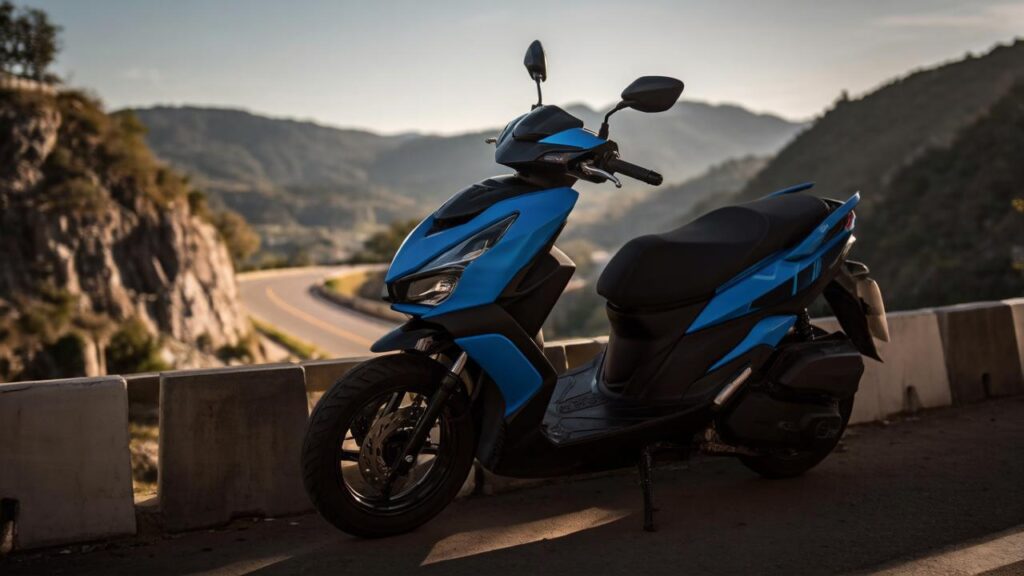
High-performance regional exploration requires a mechanical platform capable of aggressive tracking through tight geometric corners while maintaining uncompromised high-speed stability across open valley straights. For dynamic riders aiming to rent scooter chiang mai networks, selecting a sport-oriented automatic chassis rather than a traditional flat-floor commuter completely alters the physical feedback loop of the ride. The Yamaha Aerox 155 represents the benchmark for liquid-cooled sport scooters within the Northern Thailand touring ecosystem.
This technical evaluation inspects the mechanical DNA of the Aerox 155, focusing on its Blue Core variable valve actuation (VVA) powertrain, rigid underbone chassis layout, and specialized sport suspension tuning designed for fast-paced mountain transit.
Powertrain Performance and VVA Mechanics
The defining technological asset of the Yamaha Aerox 155 is its liquid-cooled, 4-stroke, SOHC, 4-valve single-cylinder engine equipped with Variable Valve Actuation (VVA). Displacing 155cc, this power unit mirrors the high-revving performance architecture found in light sport-motorcycles. The VVA system shifts the valve profile at approximately 6,000 RPM, introducing an aggressive secondary surge of acceleration that prevents power drops during mid-range passing maneuvers on steep highway ascents.
When charging up continuous mountain grades, standard automatic systems often bog down as thermal saturation builds inside the CVT housing. The Aerox engine management matrix maintains crisp throttle authority, utilizing a high compression ratio of 11.6:1 to optimize thermal expansion efficiency. Riders managing high-torque demands through consecutive elevation shifts will find this engine configuration exceptionally responsive compared to lower-spec utility scooters.
Power Delivery
15.1 HP @ 8,000 RPM backed by 13.9 Nm of torque, optimized via VVA valve switching for high-RPM alpine climbing.
Cooling Matrix
Forced liquid circulation system prevents oil degradation under sustained heavy throttle applications in tropical heat.
Chassis Geometry and Sport Ergonomics
Unlike conventional commuter platforms, the Aerox features a prominent central backbone frame tunnel that houses the fuel tank, shifting the center of gravity downward and toward the middle of the wheelbase. This structural design drastically reduces high-speed weaving when banking sharply into descending switchbacks.
The riding posture is forward-biased and aggressive, requiring the operator to adopt a more active physical stance. Footpegs are angled to allow deep knee locking against the central tunnel, providing superior lateral control during hard cornering inputs on high-grade asphalt circuits.
Suspension Calibration and Road Feedback
Sport performance demands firm damping parameters. The telescopic front forks and twin rear sub-shock absorbers on the Aerox 155 are significantly stiffer than standard fleet setups. While this sacrifices low-speed comfort over broken urban concrete, it yields exceptional tracking precision on well-paved mountain passes.
High-frequency chatter is absorbed cleanly without inducing secondary chassis oscillation. When encountering mid-corner bumps at an elevated lean angle, the rigid rear suspension prevents the back end from stepping out of line, preserving the rider’s intended trajectory through the curve.
Handling Observations on Technical Passes
The wide 140/70-14 rear tire footprint provides an immense contact patch during maximum banking angles. Combined with the forward weight distribution, front-end feedback remains transparent and highly communicative, allowing riders to sense exact front tire grip thresholds on damp surfaces.
Braking Architecture and Deceleration Control
Rapid momentum generation requires a commensurate stopping apparatus. The Yamaha Aerox 155 utilizes a 230mm hydraulic front disc brake paired with a standard mechanical rear drum, or an upgraded ABS configuration depending on the specific regional fleet tier.
The front disc provides immediate initial bite, though aggressive downhill use requires disciplined brake modulation to manage thermal loading. The wider front tire profile assists the braking system by distributing kinetic friction forces more evenly across the asphalt surface during hard straight-line slowdowns.
Fleet Utility and Maintenance Realities in the North
Operating a high-performance sport scooter in Northern Thailand introduces specific service requirements. The aggressive VVA valvetrain and high-compression piston assembly demand immaculate air filtration. Dust ingestion from dry rural roads reduces throttle efficiency rapidly, requiring frequent cleaning of the dual-element CVT and engine intake filters.
Additionally, fuel grade management is vital. The 11.6:1 compression engine performs best on high-octane Gasohol 95, ensuring complete combustion stability and preventing premature valve carbonization during high-temperature mountain runs.
Final Editorial Verdict
The Yamaha Aerox 155 stands as an exceptional choice for competent riders prioritizing handling dynamics, VVA engine response, and absolute structural stability over casual convenience. It converts technical mountain corridors into an engaging, high-precision riding experience.